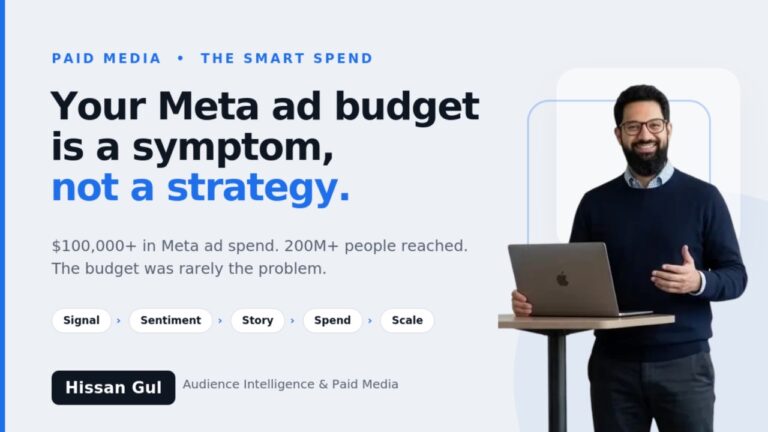
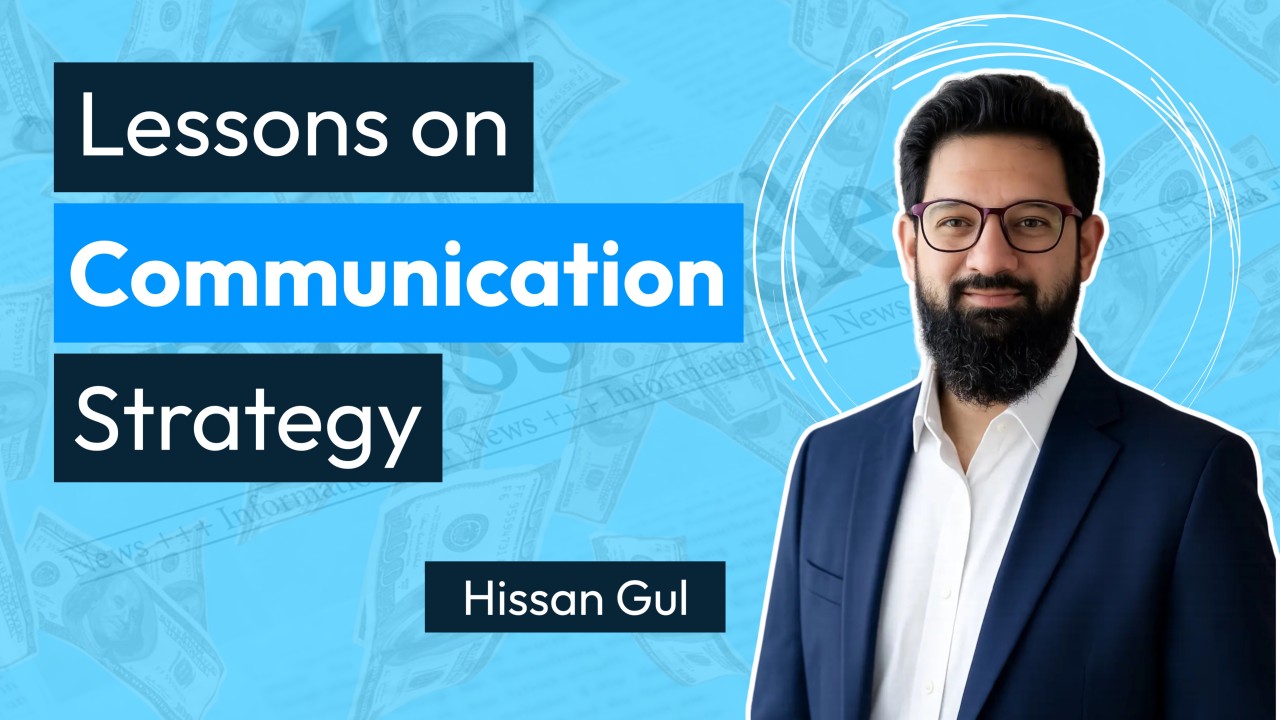
In digital communications, many organizations discuss distribution before they discuss substance.
Budgets are allocated. Platforms are selected. Ads are optimized. But one strategic question is often ignored:
Would this story still matter if nobody paid to distribute it?
Over the years, I have worked on both sides of this equation: inside newsrooms and inside communications teams. That experience gradually changed how I think about:
- earned media
- paid visibility
- audience intelligence
- newsroom logic
- trust-led communication systems
- long-term strategic communications
One lesson kept repeating itself:
Relationships may open newsroom doors. But audience relevance is what keeps stories alive.
The Problem With Distribution-First Communication
Many communication teams still approach visibility backwards. The process often starts with:
- ad budgets
- platform plans
- media lists
- distribution tactics
Only later does the harder question emerge:
Why should audiences care in the first place?
This matters because paid media can amplify visibility, but it cannot manufacture genuine relevance.
In many cases, weak narrative strategy simply becomes more visible faster. That distinction becomes critical in today’s communication environment where:
- audience attention is fragmented
- newsroom resources are shrinking
- trust is harder to sustain
- algorithms constantly shift
- audiences ignore institutional self-importance quickly
The organizations that build sustainable visibility are usually the ones that understand audiences before they optimize distribution.
What Working Inside Newsrooms Teaches About PR Strategy
Years ago, while working as a desk editor, I regularly reviewed:
- press releases
- institutional announcements
- media pitches
- event summaries
- development-sector communication material
Many arrived with expectations attached. Some came through professional relationships. Some through organizational influence. Others through persistence. But inside editorial environments, another reality existed. Editors still asked:
- Is this relevant?
- Is there a real angle?
- Does this affect people?
- Would readers care?
- Can this stand on its own?
Relationships sometimes helped weak stories get initial attention. But weak stories rarely sustained editorial interest. This distinction matters because many communication teams mistake access for effectiveness.
They are not the same thing.
Why Audience Relevance Matters More Than Media Access
One of the biggest misconceptions in communications is assuming visibility comes mainly from relationships.
Relationships matter. But relationships alone rarely create sustainable coverage. Newsrooms still operate around:
- relevance
- timing
- audience fit
- editorial logic
- public interest
- emotional resonance
This is why two organizations with similar access to journalists can receive completely different outcomes.
The difference is often not distribution. It is narrative relevance. I gradually started calling this the:
Editorial Relevance Test
Before pitching any story, ask:
Would this still attract attention without the relationship?
If the answer is no, then the visibility is likely being supported more by access than by merit. That does not necessarily make it unethical. But it does make it fragile.
From Press Release Distribution to Strategic Story Framing
Later, in 2012, while working in communications for an international NGO in Islamabad, I started applying newsroom thinking differently.
Instead of asking:
“How do we distribute this?”
I started asking:
“Why should anyone outside the organization care about this?”
That shift changed how I approached communication strategy.
One example involved what initially appeared to be a routine awareness event.
The original framing had limited public relevance. So the story was reframed around the broader impact of noise pollution on plant life, connecting:
- environmental science
- public awareness
- urban realities
- everyday relevance
(Link to original PR published by The Nation without changing a single word: https://www.nation.com.pk/29-Sep-2012/noise-pollution-equally-affects-plants-expert)
The lesson was important. Often, the problem is not the activity itself.
The problem is that communication teams describe activities institutionally instead of contextually. Audiences do not automatically care about organizational processes. They care about:
- consequences
- relevance
- impact
- risk
- emotion
- opportunity
- human meaning
This is where strategic communications begins to separate itself from simple information distribution.
Why Beat Alignment Improves Earned Media Coverage
Another important lesson in strategic communications emerged when I changed how stories were matched to newsroom beats.
Instead of relying mainly on “NGO-beat” outreach, I started aligning stories with subject specialists.
- Science stories went to science reporters
- Economic stories went to economy reporters
- Education stories went to education reporters
This sounds obvious now, but it was not always operationally common.
At the time, some resistance existed because development-sector communication often remained trapped within predictable “livelihood project” narratives.
But newsroom logic works differently. Specialized reporters are usually looking for:
- relevance to their beat
- stronger audience fit
- evidence
- trend value
- public interest angles
That shift improved outcomes because the story finally matched the editorial environment it was entering.
Communication strategy becomes stronger when narrative fit aligns with newsroom logic.
Earned Media vs Facilitated Visibility: The Grey Zone in PR
Communication theory often separates:
- earned media
- paid media
- owned media
Operational reality is usually more complicated.
In many communication environments, especially relationship-driven ecosystems, facilitation exists somewhere in between.
Relationships may help access. But access alone rarely sustains coverage over time. That is why I often return to one uncomfortable question:
Would this story run without the relationship?
If the answer is no, then the visibility is likely being subsidized by proximity rather than sustained by editorial value.
Again, this does not automatically make it unethical.
But sustainable communication systems depend on:
- audience value
- editorial fit
- trust
- timing
- strategic framing
- narrative relevance
Not only proximity.
The 2020 Lesson: Why Human-Centered Stories Still Perform Better
Years later, during communications work connected to fundraising initiatives in 2020, the same principle appeared again.
One campaign around no-touch-method fundraising gained traction because it connected:
- a local operational issue
- national conditions
- public anxiety
- human behavior
- emotional relevance
The story did not work because of distribution alone. It worked because audiences immediately understood why it mattered.
(Link to original press release published by Dawn without changing the angling: https://www.dawn.com/news/amp/1550832)
This distinction is critical in today’s digital environment.
Platforms change constantly. Algorithms change constantly. Audience psychology changes more slowly. People still respond to:
- relevance
- trust
- usefulness
- clarity
- emotional connection
- timing
This is why communication strategy should begin with audience intelligence rather than platform obsession.
Paid Media Cannot Repair Weak Communication Strategy
One of the biggest mistakes organizations make today is using paid media to compensate for weak communication strategy.
Paid distribution can amplify visibility. But it cannot manufacture:
- audience trust
- narrative relevance
- editorial value
- emotional connection
- strategic positioning
In some cases, excessive paid amplification simply accelerates audience fatigue faster. This is especially important for:
- NGOs
- startups
- public-interest campaigns
- educational institutions
- Pakistan-focused organizations
- international brands entering Pakistan’s digital market
The most sustainable communication systems are not built only on advertising spend. They are built on:
- audience intelligence
- trust formation
- newsroom logic
- narrative fit
- strategic consistency
- communication credibility
Paid media should amplify strategic communication. Not replace it.
What Trust-Led Communication Systems Actually Mean
Trust-led communication systems are communication models built around:
- audience relevance
- credibility
- consistency
- strategic framing
- long-term relationship building
They reduce overdependence on paid amplification by making communication itself more valuable, memorable, and sustainable. In practical terms, this means:
- understanding audience psychology before campaign design
- building narratives around public relevance
- creating communication assets that survive beyond advertising cycles
- aligning communication with real audience behavior instead of institutional assumptions
This becomes especially important in emerging digital markets where audience trust is fragile and advertising costs continue rising.
A Practical Framework for Strategic Communications Teams
Before distributing any:
- press release
- campaign
- communication initiative
- fundraising appeal
- awareness message
Ask these six questions.
1. Why does this matter outside the organization?
Avoid institutional self-importance.
2. What public relevance exists here?
Find consequences, impact, or human meaning.
3. Which newsroom beat naturally owns this story?
Match editorial specialization.
4. Is this timely?
Timing often determines visibility.
5. Would audiences care without advertising?
This is the hardest but most useful test.
6. Are we building long-term trust or short-term impressions?
Visibility and credibility are not identical.
Communication Strategy Checklist Before Paid Media
Audience Relevance
- Does this story matter outside the organization?
- Is there human impact?
- Is the framing audience-centered?
Editorial Logic
- Which beat naturally fits this story?
- Is there data, evidence, or trend relevance?
- Would a newsroom independently care?
Strategic Fit
- Does this align with long-term positioning?
- Are we building trust or only impressions?
- Does this reduce future dependency on ad spend?
Distribution Strategy
- Which platforms naturally suit this story?
- What format fits audience behavior?
- What happens if paid amplification stops?
Final Lessons on Trust-Led Communication Systems
The future of strategic communications will belong less to organizations that simply spend more and more to those that understand audiences better.
Communication strategy should begin before:
- media buying
- platform selection
- campaign optimization
- paid amplification
It should begin with understanding:
- audience psychology
- newsroom logic
- trust formation
- narrative relevance
- human behavior
Because in the long run, sustainable visibility is rarely purchased once. It is earned repeatedly.
About the author. Hissan Gul is a Pakistan-based digital strategist, audience analyst, and strategic communications expert with 15+ years across newsrooms, the development sector, e-commerce, and training. A Google-certified trainer and an International Center for Journalists (ICFJ) fellow and master trainer, he consults and trains on audience analysis, ethical OSINT methodology, digital communication strategy, AI in journalism, and mobile journalism — with hands-on experience building workflow automation for newsrooms, public relations teams, and not-for-profit organisations. He writes at hissangul.com.
Open Discussion
In today’s communication environment, what sustains visibility longer:
- relationships,
- distribution budgets,
- or narrative relevance?
I’m particularly interested in perspectives from:
- newsroom professionals
- communication strategists
- PR practitioners
- NGOs
- media organizations
- digital marketing teams
- professionals working across emerging markets
Especially interested in how this differs between communication theory and operational reality.